
What Is a Ceiling Lift System & Who Needs One?
Mobility changes can affect everyday routines in ways many families don’t anticipate. Activities that once seemed simple, such as transferring from a bed to a wheelchair or assisting someone in the bathroom, can gradually become physically demanding for both the individual and the caregiver.
In many homes, caregivers must perform multiple assisted transfers each day. Over time, this can lead to physical strain, fatigue, and increased risk of injury. For individuals with limited mobility, manual transfers can also feel unstable or uncomfortable.
Because of this, many families begin exploring home accessibility solutions that make caregiving safer and daily movement more manageable.
One increasingly important solution is the ceiling lift system for home environments. These assistive mobility systems help safely transfer individuals between locations, such as beds, wheelchairs, and bathrooms, while reducing the physical effort required from caregivers.
Understanding how ceiling lift systems work and when they are most useful can help families determine whether this accessibility solution may be appropriate for their home.
What Is a Ceiling Lift System?
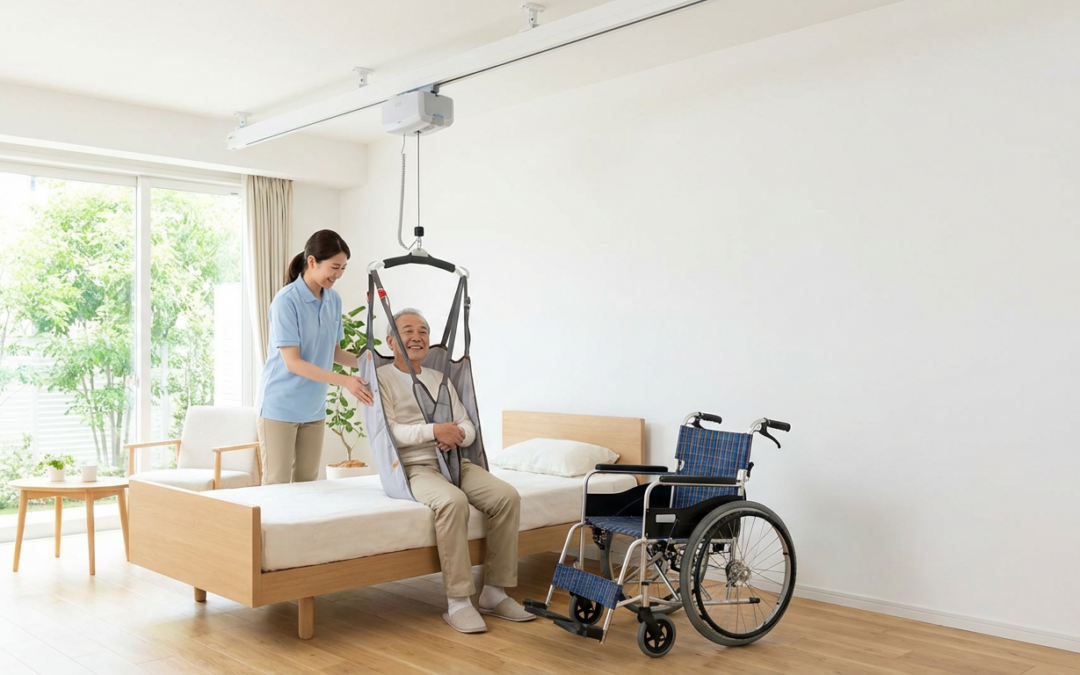
A ceiling lift system used in a home is a motorized patient transfer device installed on ceiling-mounted tracks that allows individuals with limited mobility to move safely between locations such as beds, wheelchairs, and bathrooms.
The system uses a sling and motorized lift unit that travels along a ceiling track, allowing caregivers to assist with transfers without physically lifting the individual. These systems are commonly used in home accessibility setups to improve caregiver safety and support aging in place.
What Is a Ceiling Lift System?
A ceiling lift system is a mobility device designed to assist with safe transfers between different locations within a room or between connected spaces.
The system operates using a motorized lift unit attached to a ceiling-mounted track. A supportive sling holds the individual during movement, allowing them to be transferred safely while remaining comfortably supported.
Unlike portable lifting equipment that sits on the floor, ceiling lifts are mounted overhead. This design helps create smoother transfers while keeping floors clear of bulky equipment.
Ceiling lift systems are widely used in healthcare environments such as hospitals and rehabilitation facilities. However, they are also increasingly installed in residential settings where individuals require consistent assistance with daily movement.
For families providing ongoing care, installing a ceiling lift system for home use can significantly improve both safety and efficiency during transfers.
How Does a Ceiling Lift System Work?
Although the technology behind ceiling lifts is advanced, the basic operation is designed to be simple and safe.
A typical system includes three main components.
Ceiling Track — The track is securely installed along the ceiling structure. It creates a pathway that allows the lift motor to move smoothly between different areas of a room or between connected rooms.
Lift Motor — The motorized lift unit travels along the track and performs the lifting motion. It raises and lowers the individual while maintaining a stable and controlled transfer.
Sling Support — The individual sits or rests in a supportive sling attached to the lift motor. The sling provides secure support while the lift moves between locations.
Using simple handheld controls, caregivers can lift and transfer individuals safely without performing manual lifting.
Because the system is mounted overhead, the lift provides stable movement while minimizing obstacles on the floor.
Why Ceiling Lift Systems Are Used in Homes
Home accessibility solutions have become increasingly important as more families choose to support aging in place.
Aging in place refers to the ability for individuals to remain safely in their own homes as mobility needs change over time. Instead of relocating to assisted living facilities, homeowners are adapting their living spaces with accessibility equipment.
Assistive technologies such as stair lifts, ramps, and patient transfer equipment help create safer home environments.
A ceiling lift system for home environments can support this goal by enabling individuals to move safely between key locations within the home.
For caregivers, the system also reduces the physical strain associated with repeated manual lifting.
Who Can Benefit From a Ceiling Lift System?
Ceiling lift systems are designed to assist individuals who require support during transfers due to limited mobility or physical conditions.
Several situations may benefit from these systems.
Individuals With Limited Mobility
People who cannot stand or move independently may require assistance when transferring between a bed, wheelchair, or bathroom area.
Long-Term Care Situations
Families caring for individuals with chronic mobility conditions often rely on assistive equipment to maintain safe caregiving routines.
Injury Recovery
Temporary mobility limitations after surgery or injury may also require assisted transfers during recovery.
In these situations, installing a ceiling lift system for home use can provide consistent and stable assistance for daily movement.
Ceiling Lift vs Floor Lift: What’s the Difference?
When researching patient transfer equipment, many homeowners compare ceiling lifts with portable floor lifts.
Both devices are designed to help caregivers safely move individuals who require assistance, but they operate differently.
| Feature | Ceiling Lift | Floor Lift |
| Installation | Mounted on a ceiling track | Freestanding equipment |
| Movement | Travels along the ceiling rail | Rolls on wheels |
| Space Usage | Minimal floor space required | Requires open floor space |
| Transfer Path | Fixed track movement | Manual positioning needed |
Ceiling lifts are often preferred in situations where frequent transfers occur, and caregivers want a more permanent mobility solution. Floor lifts may be useful in situations where permanent installation is not possible.
Understanding these differences helps families choose the most practical equipment based on their caregiving needs and home layout.
How Much Does a Ceiling Lift System Cost?
The cost of installing a ceiling lift can vary depending on several factors, including the size of the track system, the type of lift motor, and whether the system connects multiple rooms.
According to accessibility equipment pricing guides and mobility product listings:
- Basic ceiling lift systems may start around $8,000–$10,000 for single-room installations.
- Multi-room ceiling lift systems with additional track configurations can range from $15,000–$20,000 or more, depending on complexity.
- Individual lift motors or components may cost several thousand dollars, depending on the model and capacity.
For example, some ceiling lift motors are listed between $8,000 and $10,000, depending on the configuration and weight capacity.
Installation costs can vary based on home structure, ceiling support requirements, and track design. Because each home layout is different, accessibility specialists typically perform an evaluation before providing an accurate estimate.
Why Professional Installation Matters
Ceiling lift systems must be installed securely into the structural components of the ceiling to safely support the weight of the lift and user.
Professional installers evaluate:
- ceiling joists and support structure
- track layout and room configuration
- safe weight capacity
- electrical and charging requirements
Professional installation helps ensure the system meets safety standards and functions properly.
Homeowners exploring ceiling lift solutions can learn more about available systems and accessibility equipment through Independent Living Solutions.
When Should You Consider a Ceiling Lift System?
Many families begin researching lift systems after noticing changes in mobility that make transfers more difficult.
Common signs that a ceiling lift may be beneficial include:
- difficulty transferring safely between bed and wheelchair
- caregivers experiencing back strain during lifting
- increased fall risk during assisted movement
- limited floor space for portable equipment
In these situations, installing a ceiling lift system for home environments can help create safer and more efficient caregiving routines.
Accessibility specialists can assess the home layout and recommend lift configurations that best support the user’s mobility needs.
To learn more about ceiling lift systems and installation options, visit: Independent Living Solutions
Supporting Safe Mobility at Home
Mobility challenges do not have to prevent individuals from living comfortably in their homes. With the right accessibility solutions in place, families can create safer environments that support both independence and effective caregiving.
Equipment such as stair lifts, home accessibility modifications, and patient transfer systems allows individuals to continue using their homes with greater confidence while reducing the physical strain on caregivers.
A ceiling lift system can be especially helpful when frequent transfers are part of daily care routines. By providing stable and controlled movement, these systems help improve safety while making everyday tasks more manageable for everyone involved.
If you’re exploring ways to make your home safer and more accessible, learning more about installing a ceiling lift system for home use can be a valuable first step.
You can explore available solutions and speak with accessibility specialists at Independent Living Solutions. Our team can help evaluate your home layout and recommend mobility solutions designed to support safe, comfortable movement at home.
FAQs
What is a ceiling lift system for home use?
A ceiling lift system for home is a motorized patient transfer device mounted on ceiling tracks that helps safely move individuals between locations such as beds, wheelchairs, and bathrooms.
Who typically needs a ceiling lift system for home care?
Individuals with limited mobility, long-term physical conditions, or those recovering from surgery often benefit from ceiling lift systems that assist with daily transfers.
How much does a ceiling lift system for the home cost?
Basic systems may start around $8,000–$10,000, while multi-room installations can exceed $15,000 depending on track configuration and installation requirements.
Are ceiling lifts better than floor lifts for home care?
Ceiling lifts provide smoother transfers and require less floor space, while floor lifts are portable and do not require installation.
Where can I learn more about ceiling lift system options?
You can explore ceiling lift solutions and installation services here:
https://independentlivingsolutionsinc.com/ceiling-lift-systems/