
A woman in Lakewood called us last year. She’d already paid a national retailer to ship a stair lift to her home. The box sat in her garage for three weeks before she figured out no local technician would touch it for liability reasons. The unit sat there while her mother slept downstairs because the upstairs bedroom was no longer accessible. That situation shouldn’t happen to anyone.
Choosing a stair lift dealer near you isn’t just about price. It’s about whether someone actually shows up, measures your specific staircase, installs the right equipment, and comes back when something needs attention. This guide walks through exactly what to look for and what to avoid.
Why Local Stair Lift Dealers Outperform National Retailers
The Service Gap Nobody Talks About
National retailers can ship equipment quickly. What they can’t do is send someone to your home in Evergreen when the lift stops working on a February evening. That gap between purchase and service is where a lot of families find themselves stuck.
A local stair lift dealer maintains relationships with customers after the sale. At Independent Living Solutions, we’ve been operating out of Wheat Ridge since 2008, and our service area covers the Front Range and surrounding Colorado communities. When a service call comes in, we respond locally. That’s not a marketing claim. It’s just how a small business has to operate to stay in business.
What Local Dealers Actually Provide That National Chains Don’t
- A free in-home assessment before any equipment is ordered
- A technician who physically measures your staircase rather than guessing from photos
- A showroom where you can sit in the equipment before committing
- Direct accountability when something goes wrong
The free in-home assessment matters more than most families realize. Staircase dimensions, ceiling clearance, tread depth, and the distance to the nearest outlet all affect which product fits and how it’s installed. A dealer who quotes you over the phone without seeing the space is guessing.
What to Look For When Evaluating a Stair Lift Dealer
Accreditation and Track Record
BBB A+ accreditation isn’t the only marker of a reputable dealer, but it’s a baseline. Independent Living Solutions has held BBB A+ accreditation since January 2009. That kind of standing takes consistent customer service over years, not just a good week.
Ask how long the company has been operating. Ask whether they handle their own installations or subcontract to third parties. Ask whether the technician who installs your lift is the same person who will service it.
Inventory Depth and Brand Range
A dealer who carries only one brand has a commercial reason to sell you that brand regardless of whether it fits your situation. We carry Handicare, Harmar, Savaria, and Bruno units because different bodies, different staircases, and different budgets need different solutions.
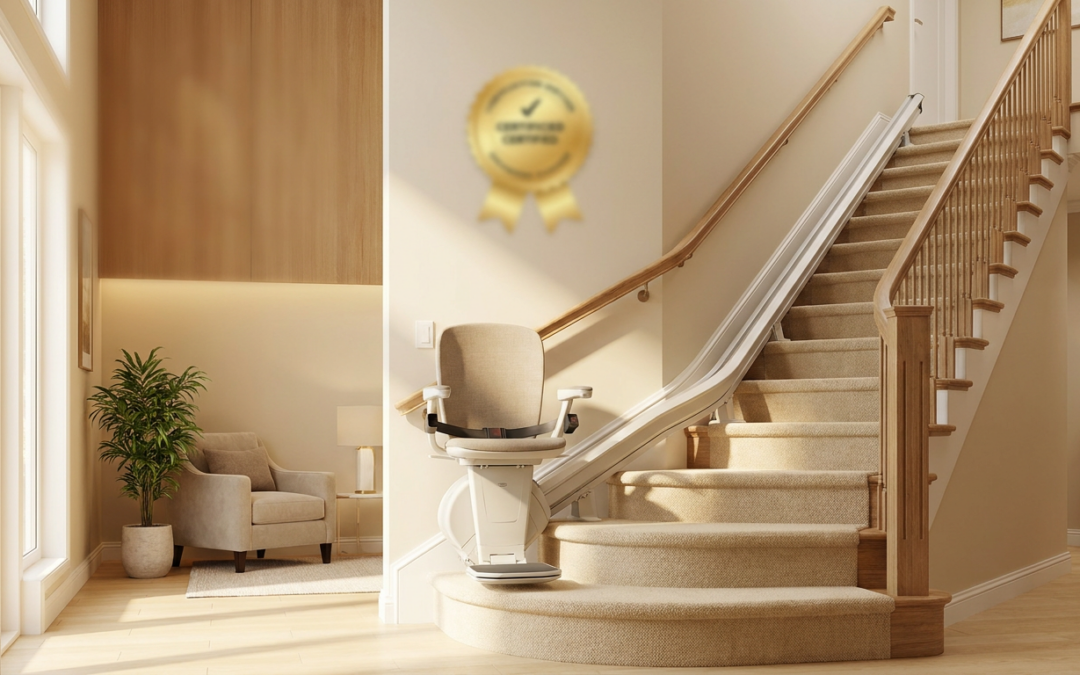
This matters especially when you’re looking at handicap lifts for sale across multiple categories. A straight stair lift, a curved residential chair lift, and a residential vertical platform lift are genuinely different products designed for different situations. A dealer who treats them as interchangeable probably doesn’t know them well enough to help you choose correctly.
Honest Pricing Without Hidden Fees
Here’s what pricing from a straightforward dealer looks like:
| Equipment Type | Condition | Installed Price Range |
| Straight stair lift | New | $4,100 to $4,900 |
| Straight stair lift | Certified pre-owned | $2,900 to $3,700 |
| Curved stair lift | New (custom) | Starting around $14,000 |
These are our actual installed prices. “Installed” means the technician comes to your home, mounts the rail to the stair treads (not the walls), tests the system under load, and trains you on operation before leaving. There are no separate delivery fees, no labor add-ons.
New vs. Certified Pre-Owned Stair Lifts: What Most Dealers Won’t Tell You
The Honest Comparison
What most dealers won’t tell you is that certified pre-owned straight stair lifts go through the same professional inspection and installation process as new units. The difference is the price, the manufacturing date, and the warranty terms.
New straight stair lifts carry a one-year labor warranty on installation and full manufacturer warranty coverage. Pre-owned units cost up to $1,200 less but have more limited warranty terms. For a family on a fixed income who needs a solution on a standard straight staircase, a certified pre-owned unit installed by our team is often exactly the right choice.
Where pre-owned doesn’t make sense: curved residential chair lifts. Because each curved rail is custom-fabricated for a specific staircase, a used curved rail almost never transfers to a different home. If you need a curved lift, you’re looking at a new custom installation.
Rental as a Short-Term Option
Not every mobility need is permanent. Hip replacements, knee surgeries, and injury recoveries often create a temporary stair access problem. Rental options mean you’re not paying for permanent equipment when you need three months of coverage. Ask any dealer you’re evaluating whether they offer rentals. A dealer who only sells won’t mention this.
Understanding the Product Categories: Which One Do You Actually Need?
Stair Lifts vs. Residential Vertical Platform Lifts
These are different products for different needs, and a dealer who sells you the wrong one has done you a disservice.
A stair lift carries a seated user along a rail mounted to the staircase. The user must be able to transfer from a wheelchair or a standing position to the lift seat. Most models carry 300 to 400 lbs, depending on the manufacturer. Units in our inventory reach 400 lbs capacity for customers who would otherwise be excluded by standard weight limits.
A residential vertical platform lift moves a user vertically on a flat platform. The wheelchair stays with the user. No transfer is needed. This product is for exterior porch access where a ramp isn’t practical, or for interior level changes where the person cannot safely transfer to a seat.
Getting this distinction wrong is expensive and disruptive. A good in-home assessment from a knowledgeable dealer identifies which product actually fits before anything is ordered.
Curved vs. Straight: The Shape of the Staircase Determines Everything
If your staircase runs in a single uninterrupted line, you need a straight lift. If it has turns, multiple landings, or curves, you need a curved lift with a custom-fabricated rail. The rail on a curved system is built specifically for your staircase using photography, detailed measurements, and a CAD drawing that you approve before fabrication begins.
Installation timelines differ significantly. Straight lifts often install within the same week because we stock them. Curved lifts require custom fabrication, so the lead time is longer. We communicate that timeline clearly at the assessment stage so families can plan accordingly.
Red Flags to Watch for When Choosing a Dealer
Before you commit to any company, run through this list:
- They quote you without seeing the staircase. No legitimate dealer can give you an accurate price without an accurate measurement.
- They can’t tell you who installs the equipment. Subcontracted installation means no continuity of service.
- They carry only one brand. Single-brand dealers have a conflict of interest in every recommendation they make.
- They don’t mention the rail mounts to the stair treads. Some homeowners worry about wall damage. The rail doesn’t touch the wall. A dealer who doesn’t clarify this doesn’t know their product well.
- There’s no buyback program. When the equipment is no longer needed, you should have an exit option. We buy back qualifying units, so families aren’t left figuring out disposal on their own.
Ready to talk through what your staircase actually needs? Start with our stair lifts available for Colorado homes and schedule a free in-home assessment. Our team visits your home, measures the space, and gives you a transparent quote before you make any decision.
Frequently Asked Questions
How do I know if a stair lift dealer is reputable?
Look for BBB accreditation, years in operation, and whether they carry multiple brands. More importantly, ask whether they conduct free in-home assessments and who performs the installation. Dealers who measure your specific staircase before quoting are operating with more integrity than those who sell remotely.
What is the difference between a stair lift and a vertical platform lift?
A stair lift carries a seated user along a rail on the staircase. A vertical platform lift moves a flat platform straight up and down between two levels. Platform lifts accommodate wheelchairs without requiring a transfer, which makes them the right choice for wheelchair users who can’t safely move to a seated position
Can I buy a used stair lift from a private seller and have it installed?
You can, but most reputable dealers won’t install equipment they haven’t inspected. Private-sale units often lack documentation of service history, and parts compatibility can be a problem. A certified pre-owned unit from a dealer like ours comes with a professional inspection and professional installation.
Are curved residential chair lifts worth the higher cost?
For most families, yes. The cost of a curved stair lift starts around $14,000 installed, which is significantly more than a straight unit, but it’s a fraction of what assisted living or a home move costs over time. Staying in a familiar home, with full access to every level, has both financial and quality-of-life value that most families conclude is worth the investment.