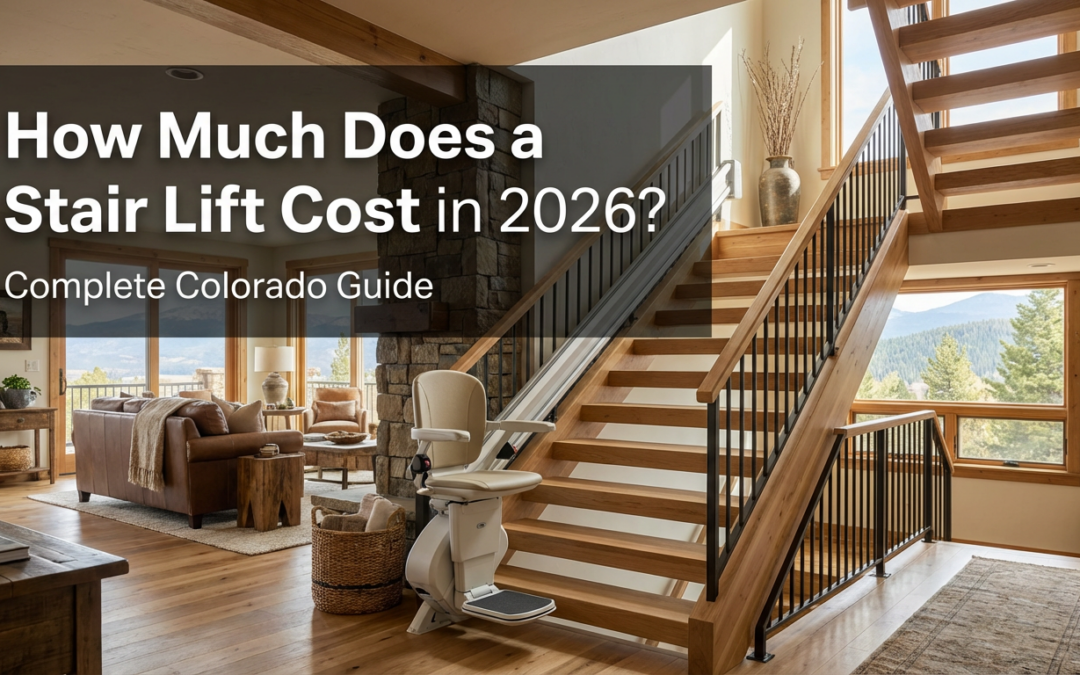
by Gary | Mar 18, 2026 | Blogs, Stair Lift
For many homeowners in Colorado, stairs can slowly become one of the most challenging parts of daily life. What once felt simple, like going upstairs to the bedroom, walking down to the basement, or moving between levels can eventually become uncomfortable or even unsafe.
Mobility changes due to aging, injury recovery, or health conditions often make climbing stairs difficult. Because of this, many families begin looking for practical ways to make their homes safer without needing to relocate or undergo major renovations.
One of the most common solutions is installing a stair lift. These mobility devices allow individuals to move safely between floors while seated, reducing the risk of falls and making it easier to continue living independently at home.
However, before exploring installation, homeowners often ask the same question: how much does a stair lift cost in 2026?
Understanding the cost of a stair lift in 2026 can help homeowners plan ahead and determine the best accessibility solution for their home. While the exact price varies depending on the staircase layout and installation needs, having a clear overview of pricing ranges can make the decision much easier.
This guide explains typical stair lift pricing, the factors that influence costs, and what Colorado homeowners should know before installing one.
Quick Answer: What Does a Stair Lift Cost in 2026?
The stair lift cost 2026 homeowners typically see depends mainly on the type of staircase and the installation requirements.
Typical pricing ranges at Independent Living Solutions include:
- New straight stair lifts: $4,100 – $4,900 installed
- Used stair lifts: $2,900 – $3,700
- Curved stair lifts: starting around $14,000 or more
Actual pricing may vary depending on staircase length, layout, and installation requirements, which is why most homeowners start with a professional in-home assessment.
Straight staircases require standard rail systems, which makes them more affordable to install. Curved staircases, on the other hand, require custom-built rails designed specifically for the layout of the staircase, which increases the cost.
Since every staircase is different, the most accurate way to determine pricing is through a professional consultation. Homeowners who want to explore available systems can view options here:
What Is a Stair Lift and How Does It Work?
A stair lift is a motorized mobility device designed to transport a person safely up and down a staircase while seated. The system includes a chair mounted on a rail that is installed along the staircase.
Using simple controls, the user can move smoothly between floors without climbing the stairs themselves.
Most residential stair lifts include several key components:
- A comfortable seat mounted to a rail system
- A motor that moves the chair along the rail
- Safety sensors and controls
- Foldable components so the staircase remains accessible for others
Because stair lifts attach directly to the stair treads rather than the wall, installation typically does not require major structural changes to the home.
For individuals with limited mobility, stair lifts provide a practical way to remain independent and continue using every level of their home.
Factors That Affect Stair Lift Cost in 2026
Although price ranges provide a helpful starting point, several factors influence the final stair lift cost 2026 homeowners receive when installing a system.
Understanding these factors helps explain why pricing can vary from one home to another.
Staircase Type and Layout
The shape of the staircase plays the biggest role in determining stair lift pricing.
A straight staircase that runs directly between floors without turns is the simplest type of installation. These systems use standard rails, which helps keep the cost lower.
A curved staircase, however, requires a custom-designed rail that follows the exact shape of the staircase. This includes turns, landings, or spiral sections. Because each rail must be manufactured specifically for the staircase, curved stair lifts are significantly more expensive.
Staircase Length
Longer staircases require longer rails and additional equipment, which increases material and installation costs.
Homes with extended staircases or multiple landings may require additional rail sections to ensure smooth and safe movement.
New vs. Used Stair Lifts
Another factor that affects the cost of a stair lift in 2026 is whether homeowners choose a new system or a pre-owned one.
Used stair lifts can sometimes provide a more affordable option, especially for straight staircases. These systems typically fall within the $2,900 to $3,700 range depending on availability and compatibility with the staircase.
New systems offer newly manufactured components and may include more customization options depending on the home’s layout.
Installation Requirements
Most stair lifts are installed directly onto the staircase rather than the wall, which means major remodeling is usually not required.
However, installation needs can still vary depending on the staircase design and the home layout. A professional installer will evaluate the staircase to ensure the lift fits properly and operates safely.
Straight vs Curved Stair Lift Cost Comparison
Understanding the difference between straight and curved stair lift systems is important when evaluating how much a stair lift costs in 2026.
Straight Stair Lifts
Straight stair lifts are designed for staircases without turns or intermediate landings. Because these systems use standard rail designs, they are generally the most affordable option.
Typical pricing includes:
- New straight stair lifts: $4,100 – $4,900
- Used straight stair lifts: $2,900 – $3,700
These systems are also typically quicker to install compared to custom options.
Curved Stair Lifts
Curved stair lifts are designed for staircases that include turns, landings, or complex layouts.
Each curved rail must be custom manufactured to match the staircase design. Because of this customization, curved stair lifts usually start around $14,000 or more depending on the staircase configuration.
Although the cost is higher, curved stair lifts allow homeowners with unique staircase layouts to install safe mobility solutions without altering their home’s structure.
Stair Lift Cost Comparison Table (2026)
| Stair Lift Type |
Typical Price Range |
Best For |
| Straight Stair Lift (New) |
$4,100 – $4,900 |
Homes with straight staircases |
| Straight Stair Lift (Used) |
$2,900 – $3,700 |
Budget-friendly installations |
| Curved Stair Lift |
Starting around $14,000 |
Staircases with turns or landings |
This comparison provides a quick overview of stair lift pricing offered by Independent Living Solutions, depending on the type of staircase and installation requirements.
Why Stair Lifts Are Popular in Colorado Homes
Many homes throughout Colorado feature multi-level floor plans. Many homes across Colorado, including areas like Denver, Colorado Springs, and Boulder, feature multi-level layouts that make stair lifts a practical accessibility solution. Basements, split-level layouts, and raised entrances are common architectural designs in the region.
While these layouts provide additional living space, they can also create mobility challenges when navigating stairs becomes difficult.
Installing a stair lift allows homeowners to safely access every level of the house without the physical strain of climbing stairs. Instead of limiting access to certain rooms or considering relocation, families can maintain full use of their home.
For homeowners planning accessibility improvements, understanding how much a stair lift costs in 2026 helps them evaluate solutions that support long-term mobility and independence.
Benefits of Installing a Stair Lift
Beyond convenience, stair lifts provide several important benefits for homeowners and their families.
Improved Safety
Staircases are one of the most common locations for household accidents. A stair lift significantly reduces the risk of falls by providing stable transportation between floors.
Maintaining Independence
Stair lifts allow individuals to move between levels without relying on assistance from others, which helps maintain confidence and independence at home.
Aging in Place
Many homeowners want to remain in their homes as they age. Stair lifts make multi-level homes easier to navigate, supporting long-term accessibility.
Access to the Entire Home
Instead of avoiding certain areas due to mobility challenges, stair lifts allow individuals to comfortably use every level of the house.
Why Stair Lift Pricing Varies Between Homes
Stair lift pricing rarely looks identical from one home to another because staircases are rarely identical.
Factors such as staircase length, layout, and installation requirements can all influence the final cost. Accessibility specialists typically evaluate the staircase first to determine the best lift configuration for safe operation.
This type of professional assessment ensures that homeowners receive a system that fits both their staircase and their mobility needs.
Understanding these factors helps explain why the stair lift cost in 2026 can vary even among homes in the same area.
Choosing the Right Stair Lift Solution
Selecting the right stair lift involves more than simply comparing prices. The goal is to find a system that fits the staircase properly and supports safe, comfortable movement between floors.
Working with a provider experienced in accessibility solutions helps ensure that homeowners receive the right recommendation for their home.
If you’re considering installing a stair lift, exploring available options is a helpful next step. You can learn more about stair lift systems and installation services here:
Is a Stair Lift More Affordable Than Moving or Remodeling?
For many homeowners, installing a stair lift is significantly more affordable than relocating or remodeling a home to accommodate mobility challenges. Home renovations such as adding an elevator, rebuilding staircases, or converting rooms to a single-floor layout can cost substantially more and take weeks or months to complete.
A stair lift installation typically provides a faster and more practical solution, allowing homeowners to continue using every level of their home safely without major construction.
Final Thoughts
Stairs should never prevent someone from comfortably living in their own home. Stair lifts provide a practical mobility solution that allows homeowners to safely move between floors without the physical strain of climbing stairs.
While the stair lift cost in 2026 varies depending on staircase type, equipment, and installation needs, understanding typical price ranges helps homeowners make informed decisions.
For many families, installing a stair lift is an important step toward improving home safety, maintaining independence, and creating a more accessible living environment.
(FAQs)
How much does a stair lift cost in 2026?
The stair lift cost in 2026 typically ranges from $4,100–$4,900 for new straight lifts, $2,900–$3,700 for used lifts, while curved stair lifts start around $14,000 depending on staircase design.
What factors affect the cost of a stair lift in 2026?
Pricing depends on staircase type, rail length, installation requirements, and whether the system is new or used.
Are stair lifts common in Colorado homes?
Yes. Many Colorado homes have multi-level layouts, which makes stair lifts a popular accessibility solution.
Do stair lifts require major home remodeling?
No. Most stair lifts are installed directly on the staircase rail system and usually do not require structural changes.
Where can I explore stair lift options in Colorado?
You can view available stair lift models and accessibility solutions here:
https://independentlivingsolutionsinc.com/stair-lifts-for-sale/
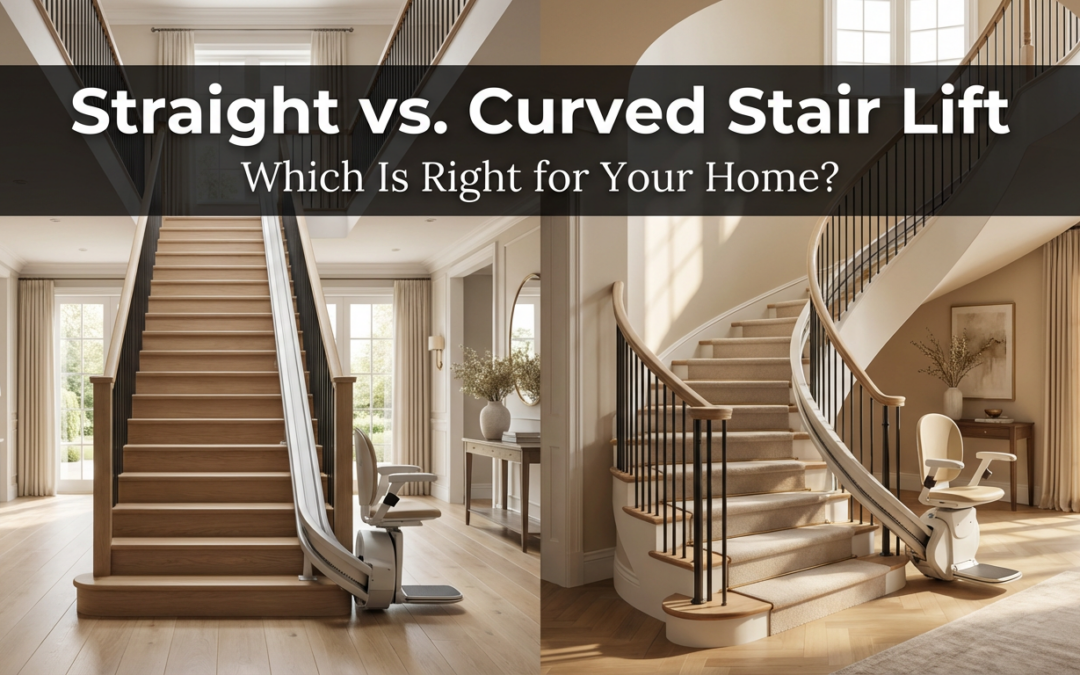
by Gary | Mar 3, 2026 | Blogs, Stair Lift
Many homes are built with stairs connecting multiple levels, especially in areas where basements, split-level layouts, and raised entrances are common. While stairs are a normal part of home design, they can gradually become harder to navigate when mobility changes due to aging, injury recovery, or certain health conditions.
Climbing stairs several times a day may begin to feel tiring or unsafe. Some homeowners start avoiding certain parts of their home altogether simply because reaching them requires navigating a staircase.
Instead of limiting access to parts of the home or considering a move to a single-level property, many families look for ways to make their current home safer and easier to navigate.
One of the most practical solutions is installing a stair lift. These motorized mobility systems allow users to travel between floors while seated, reducing strain and improving safety.
However, once people begin researching stair lift options, an important question often comes up: should you choose a straight or curved stair lift?
Understanding how straight vs curved stair lift systems work can help homeowners choose the accessibility solution that best fits their staircase design and mobility needs.
Straight vs Curved Stair Lift: Quick Answer
The difference between a straight vs curved stair lift comes down to the design of the staircase. Straight stair lifts work on staircases that run in a single line between floors, while curved stair lifts are custom-built to follow staircases that include turns, landings, or spiral layouts.
Choosing the correct system usually depends on the structure of the staircase, which is why most homeowners begin with a professional staircase evaluation.
What Is a Stair Lift and How Does It Work?
A stair lift is a motorized chair that moves along a rail installed on a staircase. The user sits in the seat and uses simple controls to travel smoothly between different levels of the home.
Most residential stair lifts include several key components:
- A seat designed for comfort and stability
- A rail system attached to the stair treads
- A motor that powers the movement along the rail
- Safety sensors and easy-to-use controls
Because the rail mounts directly to the staircase rather than the wall, stair lifts typically do not require structural modifications to the home. This makes them a practical mobility solution for homeowners who want to improve accessibility without undergoing major renovations.
When exploring different stair lift options, homeowners often discover that there are two main types available: straight and curved systems.
Understanding Straight Stair Lifts
Straight stair lifts are designed for staircases that run directly between two levels without any turns or intermediate landings.
These staircases follow a single continuous path, which allows the lift to travel along a straight rail system. Because the rail does not need to bend or change direction, straight stair lift systems use standardized rail components that are designed to fit most straight staircases. This makes them a practical and efficient accessibility solution for many homes.
Common Features of Straight Stair Lifts
Straight stair lift systems generally include:
- A single straight rail attached to the staircase
- A motorized seat that travels between floors
- Foldable components such as the seat and footrest
- Simple control options for easy operation
Because these lifts use standardized rail systems, installation is often more straightforward compared to lifts that require custom rails.
Why Many Homes Use Straight Stair Lifts
Many residential staircases are built in a straight configuration. For these homes, straight stair lifts provide a reliable and efficient accessibility solution.
Some advantages include:
Simpler Rail Design
Straight lifts use pre-engineered rails that follow the staircase directly.
Efficient Installation
With fewer custom components required, installation can often be completed more quickly.
Reliable Everyday Use
Users can move between levels safely without physically climbing stairs.
For homeowners with a straight staircase, this option is typically the most direct accessibility upgrade. However, not every home has a straight staircase. Many staircases include turns, landings, or directional changes that require a different type of lift system. In those situations, curved stair lifts are specifically designed to adapt to the layout of the staircase.
Understanding Curved Stair Lifts
Curved stair lifts are designed for staircases that include turns, landings, or unique architectural layouts. Unlike straight systems, these lifts require rails that follow the exact shape and direction of the staircase.
Because every staircase with curves or directional changes is different, curved stair lift rails are typically custom-designed to match the layout of the stairs. This allows the lift to move smoothly around bends and transitions while maintaining a safe and stable ride for the user.
Staircase Layouts That Require Curved Lifts
Curved stair lifts are commonly used for staircases that include:
- 90-degree turns
- Intermediate landings
- Spiral designs
- L-shaped or U-shaped layouts
Because the staircase changes direction, the rail must be custom-built to guide the lift smoothly around these turns.
Why Curved Stair Lifts Are Custom Systems
Curved stair lifts cannot rely on standard rail components. Instead, technicians measure the staircase precisely to design a rail that matches the exact layout.
This custom design allows the lift to move safely along complex staircases while maintaining a smooth and stable ride.
For homes with distinctive staircases, curved lifts make it possible to install a mobility solution without altering the original design of the staircase.
Straight vs Curved Stair Lift: Key Differences
When comparing straight vs curved stair lift systems, several factors help determine which option is appropriate.
| Feature |
Straight Stair Lift |
Curved Stair Lift |
| Staircase Type |
Straight staircase |
Staircases with turns or landings |
| Rail Design |
Standard straight rail |
Custom-built rail |
| Installation |
Typically faster |
Requires custom rail production |
| Staircase Layout |
Single uninterrupted path |
Multi-directional layouts |
In most cases, the staircase layout determines which type of stair lift is required.
Straight vs Curved Stair Lift: Which One Is More Common?
In residential homes, straight stair lifts are generally the more common option because many staircases run directly between two floors without turns.
Straight lifts are well suited for these staircases since the rail system follows a single path from the bottom to the top.
Curved stair lifts are used when staircases include landings or directional changes. In these cases, the lift rail must be designed to follow the staircase shape while maintaining smooth movement.
When homeowners compare straight vs curved stair lift options, the decision typically depends on the staircase design rather than personal preference.
Why Stair Lifts Are Popular in Colorado Homes
Many homes across Colorado, including areas like Denver, Colorado Springs, and Boulder, feature multi-level floor layouts that make stair lifts a practical accessibility solution.
Basements, split-level layouts, and elevated entryways are common architectural features throughout the region.
While these designs provide extra living space, they can create challenges when navigating stairs becomes difficult.
Installing a stair lift allows homeowners to continue accessing every level of the home safely and comfortably.
Rather than avoiding certain areas or considering relocation, families can maintain full use of their homes while improving mobility.
Can a Stair Lift Be Installed on Narrow Stairs?
A common concern homeowners have is whether their staircase has enough space for a stair lift. In many cases, modern lift systems are designed to work with standard residential stair widths.
Straight stair lifts typically require minimal clearance because the rail sits close to the stair treads, and the seat can fold when not in use.
Curved lifts are designed specifically to follow complex staircases, allowing the rail to move around corners while maintaining safe spacing.
A professional assessment helps determine the correct configuration so the lift system fits safely while still allowing others to use the stairs.
Benefits of Installing a Stair Lift
Stair lifts offer several benefits for homeowners who want to maintain safe mobility within their homes.
Improved Safety
Staircases are one of the most common areas where household falls occur. Stair lifts help reduce this risk by allowing users to remain seated while traveling between floors.
Greater Independence
Users can move freely between levels without relying on assistance from family members or caregivers.
Aging in Place
Many homeowners prefer to remain in their homes as they age. Stair lifts make it possible to continue living comfortably in multi-level houses.
Access to Every Level of the Home
Instead of avoiding stairs entirely, homeowners can continue using basements, bedrooms, and other areas located on different floors.
How Long Does Stair Lift Installation Take?
Installation time can vary depending on the type of stair lift system required.
Straight stair lifts often involve standard rail systems that can be installed relatively quickly once the staircase has been measured.
Curved stair lifts require custom rail manufacturing to match the exact shape of the staircase. Because of this, installation typically involves additional planning and preparation.
A professional evaluation helps determine the appropriate lift system and installation timeline based on the home’s staircase layout. Homeowners interested in learning more about available stair lift solutions can explore options through Independent Living Solutions.
When Should You Consider Installing a Stair Lift?
Many homeowners begin researching stair lifts after noticing changes in how easily they can navigate stairs.
Common signs that a stair lift may be helpful include:
- Feeling unsteady while climbing stairs
- Holding tightly to railings for support
- Experiencing fatigue when moving between floors
- Avoiding certain areas of the home
Rather than limiting movement within the home, installing a stair lift can restore safe access to every level.
Understanding the differences between straight vs curved stair lift systems is often the first step in choosing the right accessibility solution. Professionals can evaluate the staircase and recommend a system designed to fit both the home and the user’s mobility needs.
For more details about available stair lift systems, homeowners can explore options here:
https://independentlivingsolutionsinc.com/stair-lifts-for-sale/
Final Thoughts
Stairs should not prevent someone from safely enjoying their home. Stair lifts provide a practical mobility solution that allows individuals to move between floors comfortably and securely.
Understanding the differences between straight vs curved stair lift systems helps homeowners determine which type of lift best fits their staircase layout.
With the right stair lift system, families can improve safety, maintain independence, and continue using every level of their home without unnecessary strain.
FAQs
What is the difference between a straight and curved stair lift?
A straight stair lift is designed for staircases that run directly between floors, while a curved stair lift is custom-built for staircases that include turns, landings, or spiral layouts.
Which stair lift is easier to install?
Straight stair lifts usually involve simpler installation because they use standard rail systems. Curved lifts require custom rail designs that match the staircase layout.
Can stair lifts be installed on narrow staircases?
Yes. Many modern stair lift systems are designed to work with standard residential stair widths, with foldable seats that help keep the staircase accessible.
How do I know which stair lift my home needs?
The type of lift depends on your staircase design. A professional evaluation helps determine whether a straight or curved system is required.
Where can I learn more about stair lift options?
Homeowners can explore available stair lift systems and accessibility solutions here:

by Gary | Feb 18, 2026 | Blogs
Stairs are something most of us don’t think twice about, until they start to feel like a daily obstacle. For many Denver homeowners, navigating stairs can gradually become uncomfortable, risky, or even limiting. Whether mobility changes come with age, injury, or long-term health conditions, access to every level of your home matters.
That’s where a straight stair lift in Denver homes becomes a practical, dependable solution. Designed for staircases without curves or landings, straight stair lifts help restore confidence, safety, and independence without changing the home you love.
If you’re exploring accessibility options, this guide walks you through how straight stair lifts work, who they’re best for, and what Denver homeowners should know before moving forward.
Why Stair Accessibility Matters for Denver Homes
Many homes across Denver feature multi-level layouts, basements, raised entryways, or split floors. While these designs offer character and space, they can create challenges when climbing stairs becomes difficult.
Mobility limitations don’t always happen suddenly. Often, they build over time – missed steps, reliance on handrails, or avoiding certain areas of the home altogether. Addressing stair access early can help homeowners stay independent longer and reduce fall risks.
For homes with linear staircases, home stair lifts in Denver provide a reliable way to move between floors safely, every day.
What Is a Straight Stair Lift?
A straight stair lift is designed specifically for staircases that run in a straight line from bottom to top, without turns or intermediate landings. The lift travels along a rail mounted to the stair treads, carrying the user smoothly up or down the stairs while seated securely.
Because of their straightforward design, straight stair lifts are one of the most common accessibility solutions installed in residential homes.
Homeowners considering a straight stair lift in Denver often appreciate the simplicity, functionality, and minimal disruption to their living space.
Who Is a Good Candidate for a Straight Stair Lift?
Straight stair lifts are ideal for:
- Individuals who have difficulty climbing stairs safely
- Homeowners planning to age in place
- People recovering from surgery or injury
- Families supporting loved ones with limited mobility
If your staircase is straight and consistently used, this type of lift can make everyday movement easier without requiring major home modifications.
Understanding Stair Lift Installation in Denver Homes
One of the most common concerns homeowners have is whether installation will require construction or remodeling. In most cases, stair lift installation in Denver homes can be completed without structural changes.
The rail system is attached to the stairs, not the wall, allowing the lift to integrate into the existing layout. Professional assessment ensures proper placement, safe operation, and alignment with the staircase dimensions.
Independent Living Solutions focuses on thoughtful planning and precise installation to ensure each system fits the home and the user’s needs. You can learn more about available options by visiting our homepage: https://independentlivingsolutionsinc.com/
Safety Features That Support Everyday Confidence
Safety is the primary reason many homeowners choose stair lifts. A well-installed lift helps reduce fall risks and eliminates the physical strain of climbing stairs.
Straight stair lifts typically include features designed to support daily use, such as secure seating, smooth operation, and controlled movement. When professionally installed, they provide a stable and predictable way to move between floors.
For Denver families focused on long-term safety, home stair lifts in Denver are often part of a broader plan to create a more accessible living environment.
Straight Stair Lift vs. Other Mobility Solutions
Not every home requires the same accessibility solution. While some staircases need curved systems or vertical lifts, straight stair lifts work best when the staircase has no bends.
For homes with straight stairs, a straight stair lift in Denver often offers a simpler and more space-efficient solution compared to ramps or elevators. It allows continued access to all floors without altering the home’s footprint.
A professional evaluation helps determine whether a straight stair lift or another mobility option is the best fit.
Cost Considerations: What Denver Homeowners Should Expect
Pricing is an important consideration, but costs can vary based on factors such as staircase length, lift configuration, and installation requirements. Independent Living Solutions does not list fixed pricing online because every home and need is different.
Instead, homeowners are encouraged to schedule a consultation to understand what solution best fits their home and mobility goals. This ensures transparency and avoids one-size-fits-all recommendations.
Why Professional Installation Makes a Difference
A stair lift is not just a product; it’s a long-term safety system. Professional stair lift installation in Denver ensures that the lift operates correctly, fits securely, and remains reliable over time.
Experienced providers understand local home layouts, stair dimensions, and accessibility needs. Their expertise helps prevent issues related to alignment, comfort, or daily usability.
Independent Living Solutions emphasizes careful assessment and installation to help homeowners feel confident using their stair lift every day.
Planning Ahead: Aging in Place with Confidence
Many Denver homeowners choose to install stair lifts before mobility becomes a serious challenge. Planning ahead allows families to avoid rushed decisions and ensures the home remains usable through life’s changes.
By investing in home stair lifts in Denver, homeowners can maintain independence, reduce reliance on assistance, and continue enjoying every part of their home.
Take the Next Step Toward Safer Home Access
Stairs shouldn’t limit where you can go in your own home. A straight stair lift offers a dependable, practical way to move safely between floors while preserving comfort and dignity.
If you’re considering stair lift installation in Denver, Independent Living Solutions can help you explore options tailored to your home and needs. Visit our website to learn more and take the first step toward safer, more accessible living.
FAQs
Is a straight stair lift suitable for all staircases in Denver homes?
A straight stair lift is designed for staircases without curves or multiple landings. If your staircase runs in a straight line, it may be a suitable option. A professional assessment helps confirm compatibility.
How long does stair lift installation usually take?
Installation timelines can vary, but most straight stair lifts can be installed efficiently once measurements and planning are complete.
Can a stair lift be removed later if it’s no longer needed?
Yes. Stair lifts can typically be removed if mobility needs change, without permanent damage to the staircase.
Are home stair lifts in Denver only for seniors?
No. Stair lifts are used by individuals of all ages who experience mobility challenges due to injury, medical conditions, or temporary limitations.

by Gary | Feb 15, 2026 | Blogs
Can a stair lift really help you stay in the home you love? Yes. If you’re a Denver resident facing mobility challenges, installing a stair lift offers a practical solution that restores independence and eliminates the need to relocate or avoid entire floors of your home.
Understanding Stair Lifts: Your Path to Independence
A stair lift is a motorized chair that travels along a rail mounted to your stairway, allowing you to glide smoothly between floors without physical strain or fall risk. In Denver, approximately 85,000 seniors aged 65 and older call this area home, and many face the challenge of navigating stairs safely. For these residents and anyone with mobility limitations, stair lifts reduce injury risk and restore full access to every room.
Types of Stair Lifts Available for Your Home
Choosing the right stair lift starts with understanding your home’s unique layout and your specific mobility needs.
Straight Stair Lifts
Straight stair lifts are designed for standard, linear staircases without curves, turns, or intermediate landings. These are the most popular and affordable options, featuring:
- Smooth start-and-stop mechanism for comfortable rides
- Professional installation is typically completed in 2-3 hours
- No structural modifications required for your home
- Space-saving design with rails that fold when not in use
- Safety features, including seat belts, sensors, and emergency stops
Straight stair lifts integrate seamlessly into homes with traditional staircases, making them ideal for residences where access to basements, bedrooms, or second floors has become challenging.
Curved Stair Lifts
For homes with staircases that turn, curve, or include landings, curved stair lifts provide customized solutions. These lifts are:
- Custom-manufactured to match your staircase’s exact contours
- Designed for complex layouts, including switchbacks and multiple turns
- Equipped with advanced safety sensors that detect obstructions
- Engineered for quiet operation to maintain peaceful home environments
- Built with ergonomic seating for maximum comfort during longer rides
Curved stair lifts allow continuous travel from one floor to another, even on staircases with multiple directional changes – a common feature in many area homes built into hillsides or featuring split-level designs.
Key Factors in Choosing Your Stair Lift
1. Assess Your Mobility Needs
Understanding the user’s current and anticipated mobility requirements is crucial. Questions to consider:
- Can you transfer on and off the seat independently?
- Do you use a walker or a wheelchair?
- Will mobility challenges likely increase over time?
A professional home assessment helps identify the safest solution for your situation.
2. Evaluate Your Staircase Configuration
Homes in the Denver area vary widely in style. Your staircase type determines which lift suits your home:
- Straight staircases: Standard straight stair lifts
- Curved or turning staircases: Custom curved stair lifts
- Narrow staircases: Compact models that preserve walkway space
3. Budget for Quality and Longevity
When shopping for a stair lift for sale, understanding the investment is important:
New Stair Lifts:
- Standard straight models: $4,100 to $4,900 (including professional installation)
- Custom curved models: Starting around $14,000 due to custom-manufactured rails required for a precise fit
Pre-Owned Stair Lifts:
- Used straight lifts: $2,900-$3,700 (including professional installation)
- Curved staircase options: New units are typically necessary due to custom rail requirements
Both new and refurbished options include:
- Professional installation ensuring safety compliance
- Warranty coverage protecting your investment
- Thorough inspection and testing before delivery
At Independent Living Solutions, families can explore both new and pre-owned options to find solutions within their budgets without compromising on safety or reliability.
Essential Safety Features
Quality stair lifts include multiple safety mechanisms:
- Seat belts to prevent falls during transit
- Obstruction sensors that automatically stop if objects block the path
- Swivel seats with locks for safe entry and exit
- Battery-operated systems ensure operation during power outages
- Smooth acceleration and deceleration, preventing jarring movements
- Armrests and footrests that fold for storage
These features make professional stair lift installation a safe choice for mobility-challenged residents.
The Professional Installation Advantage
Stair lift installation is not a DIY project. Professional installation by experienced technicians ensures:
- Correct rail mounting to load-bearing structures
- Precise alignment for smooth, quiet operation
- Safety compliance with manufacturer specifications and local building standards
- Thorough testing before the system is turned over to you
- User training so you understand all features and emergency procedures
Reputable providers like Independent Living Solutions back their installation with one-year labor warranties, demonstrating confidence in workmanship and commitment to customer satisfaction.
Benefits Beyond Basic Mobility
Installing a stair lift delivers advantages that extend beyond getting upstairs:
- Injury Prevention: Falls on stairs are among the most common causes of serious injury for older adults
- Maintained Independence: Continue living in your home without relocating or depending on others
- Improved Quality of Life: Regain access to upper floors, basements, and all living spaces
- Peace of Mind for Family: Loved ones worry less knowing you can navigate stairs safely
- Cost-Effective Solution: A fraction of the cost compared to selling and relocating
Why Choose Local Denver Providers – Independent Living Solutions
Working with established area stair lift specialists offers distinct advantages:
- 20+ Years of Experience: Independent Living Solutions has served the greater Denver area and Front Range Colorado communities since the early 2000s
- BBB Accredited Business: Trust built on proven customer service and satisfaction
- Local Expertise: Deep understanding of local home construction, from historic Denver neighborhoods to modern mountain properties
- Responsive Service: Quick maintenance, repairs, and adjustments—often same-day or next-day service
- Showroom Access: Visit the local showroom to see models in person, test features, and speak directly with knowledgeable staff
- Professional Installation Teams: Certified technicians with manufacturer training and local building standard expertise
- One-Year Labor Warranty: Demonstrating confidence in workmanship and commitment to your satisfaction
From Assessment to Installation
Ready to explore stair lift installation in Denver? The process is straightforward:
- Free Home Assessment: A mobility consultant evaluates your staircase and discusses your needs
- Personalized Recommendations: Receive tailored options based on your requirements and budget
- Professional Installation: Trained technicians complete installation efficiently—typically within hours for straight models
- Testing and Training: Installers test all functions and train you on operation and safety
- Ongoing Support: Access maintenance plans, warranty service, and responsive assistance
Making the Right Choice for Your Denver Home
Choosing a stair lift for sale represents an investment in independence and quality of life. For local residents, focus on:
- Assessing your specific mobility needs honestly
- Understanding your staircase configuration
- Comparing new and refurbished options for the right balance of features and affordability
- Prioritizing safety features and professional installation
- Choosing experienced local providers with proven track records
Your Independence Awaits
Stairs shouldn’t dictate where you can live or which rooms in your home you can access. With professional stair lift installation in Denver, you reclaim control over your living space and maintain the independence you value.
Whether you’re exploring options for yourself or a loved one, the right stair lift transforms daily life by replacing anxiety about falls and physical strain with confidence and freedom of movement.
Ready to take the next step? Contact Independent Living Solutions today for a free home assessment. Our team has been helping area residents overcome mobility challenges for over two decades with new and refurbished stair lifts for sale, professional installation backed by warranty, and the responsive, personalized service you deserve.
Don’t let stairs keep you from the home you love. Discover how the right stair lift can restore your independence — safely, affordably, and with the support of Denver’s trusted mobility solutions provider.
FAQs
How much does stair lift installation in Denver usually cost?
The cost of stair lift installation in Denver depends on factors like staircase type, lift model, and installation requirements. Straight staircases are typically more straightforward, while custom configurations may require additional planning. A professional assessment helps determine accurate pricing.
How long does stair lift installation take in a Denver home?
Most stair lift installations in Denver homes can be completed in a short timeframe once the correct lift is selected and measurements are finalized. Timelines may vary depending on staircase design and installation complexity.
Do I need to modify my home before installing a stair lift in Denver?
In most cases, no major home modifications are required. Stair lifts are designed to fit along existing staircases, allowing homeowners to improve accessibility without remodeling their home.
Is installing a stair lift in Denver a good alternative to moving or renovating?
Yes. For many homeowners, stair lift installation offers a practical alternative to relocating or undergoing major renovations. It allows continued access to all levels of the home while supporting long-term safety and independence.

by Steven Pal | Feb 10, 2026 | Blogs
stairs are often one of the first parts of a home to feel limiting when mobility begins to change. What used to be a quick trip upstairs can slowly turn into something that feels risky or exhausting. For many Denver homeowners, this moment sparks an important question: How can I stay comfortable and independent in my own home without major remodeling?
That’s where curved stair lifts come into the conversation. If your staircase includes turns, landings, or custom angles, a curved stair lift in Denver can provide safe, reliable access between levels while preserving the layout of your home.
This guide breaks down what homeowners should know, like how curved stair lifts work, when they’re needed, and how to make the right decision for long-term accessibility.
What Is a Curved Stair Lift and How Does It Work?
A curved stair lift is designed for staircases that are not straight from top to bottom. These systems follow the exact path of your staircase, including bends, intermediate landings, and changes in direction.
Because no two curved staircases are identical, each lift is planned specifically for the home. The rail is shaped to match the staircase layout, allowing the lift to move smoothly and securely from one level to the next.
For homeowners considering a stair lift in Denver, curved options are often the most practical solution when the staircase design doesn’t allow for a straight system.
Why Curved Stair Lifts Are Common in Denver Homes
Denver homes come in a wide range of architectural styles. Split-level layouts, older homes with character staircases, and custom-built interiors often include turns or landings that make straight lifts impractical.
Curved stair lifts are commonly chosen because they:
- Adapt to complex staircase designs
- Allow continued use of all home levels
- Avoid the need for structural changes
Instead of working around the staircase, the lift works with it—an important factor for homeowners who want accessibility without disrupting their home’s layout.
Signs Your Home May Need a Curved Stair Lift
Many homeowners aren’t sure when it’s “time” to consider a stair lift. In most cases, the need develops gradually rather than all at once.
You may want to explore a curved stair lift if:
- Your stairs include turns or multiple sections
- You feel unsteady or fatigued on stairs
- You’re limiting access to certain levels of your home
- You want to plan ahead for aging in place
Installing a lift before mobility becomes a serious concern often leads to better comfort and peace of mind.
Safety and Ease of Daily Use
Safety is one of the most common concerns homeowners research when looking into stair lifts. A properly planned curved stair lift supports safer movement by reducing the risk of falls and eliminating the need to navigate steps manually.
Homeowners also value ease of use. A stair lift in Denver should feel intuitive and comfortable as part of everyday routines, whether it’s accessing bedrooms, bathrooms, or lower levels of the home.
When installed professionally, stair lifts become a reliable part of daily living rather than a temporary solution.
How Curved Stair Lifts Are Planned for Individual Homes
Unlike straight systems, curved stair lifts require detailed planning. The staircase layout, turning points, and entry and exit locations all matter.
Independent Living Solutions evaluates:
- Staircase configuration
- Available space around landings
- How the lift will be used day to day
This customized approach ensures the lift fits the home properly and supports long-term usability. For homeowners researching a curved stair lift in Denver, a professional assessment is essential to avoid improper fit or functionality issues.
Curved Stair Lifts vs. Straight Stair Lifts
One of the most searched questions homeowners ask is whether they need a curved or straight stair lift.
The difference comes down to staircase design:
- Straight lifts work only on staircases without turns
- Curved lifts are designed for stairs with bends, landings, or complex layouts
Choosing the wrong type can limit access or require unnecessary changes. That’s why understanding your staircase structure is the first step in selecting the right solution.
Can Curved Stair Lifts Be Installed in Existing Homes?
Yes, absolutely, curved stair lifts are commonly installed in existing homes. Many Denver homeowners choose them specifically because they don’t want to remodel or relocate.
Instead of altering the staircase, the lift is planned to fit within the existing layout. This allows homeowners to improve accessibility while maintaining the original structure and design of their home.
Planning for Long-Term Independence
A common misconception is that stair lifts are only for immediate needs. In reality, many families plan accessibility upgrades years in advance.
Installing a curved stair lift early can:
- Reduce future stress
- Support aging in place
- Allow continued use of the full home
For Denver homeowners who want to remain in their homes long term, proactive planning often leads to better outcomes than waiting for mobility challenges to escalate.
Why Professional Guidance Makes a Difference
Accessibility solutions are not one-size-fits-all. Proper planning, placement, and guidance directly impact how well a stair lift functions over time.
Independent Living Solutions focuses on helping homeowners:
- Understand their options clearly
- Choose solutions that fit their home layout
- Avoid unnecessary or incorrect installations
This consultative approach helps homeowners feel confident in their decision rather than overwhelmed by it.
Exploring Curved Stair Lift Options
If your staircase includes turns or landings, exploring curved stair lift options early allows you to make informed decisions without pressure.
You can learn more about available curved stair lift solutions here
Understanding what’s available and what works best for your home helps you plan with clarity and confidence.
Why Denver Homeowners Trust Independent Living Solutions
Choosing the right provider is just as important as choosing the right lift. Independent Living Solutions works with homeowners to identify accessibility solutions that align with their mobility needs and home design.
Their approach emphasizes:
- Thoughtful evaluation
- Clear communication
- Long-term usability
By guiding homeowners through the process, they help create safer, more accessible living environments without unnecessary disruption. Learn more about their accessibility services here: https://independentlivingsolutionsinc.com/
Take the Next Step Toward Safer Living at Home
Stairs don’t have to determine how long you can comfortably stay in your home. With the right solution, moving between levels can feel safe, manageable, and stress-free again.
If your staircase includes curves or landings and mobility is becoming a concern, a curved stair lift may be the right next step. Planning early gives you more control, more options, and greater peace of mind. Explore curved stair lift solutions here at Independent Living Solutions.
Your home should continue to support your independence now and in the years ahead.
FAQs
When do Denver homeowners need a curved stair lift instead of a straight stair lift?
A curved stair lift is needed when a staircase includes turns, landings, or changes in direction. Many Denver homes have non-linear staircases, making a curved stair lift the most suitable option for safe, continuous access between levels.
Can a curved stair lift be installed in an existing Denver home without remodeling?
Yes. A curved stair lift in Denver can typically be installed in existing homes without major structural changes. The system is planned to follow the staircase layout, allowing homeowners to improve accessibility while preserving their home’s design.
Is a stair lift in Denver a good solution for aging in place?
Absolutely. A stair lift in Denver supports aging in place by reducing fall risks and allowing homeowners to continue using all levels of their home safely. Many families install stair lifts proactively to maintain long-term independence.
How do I know if my staircase is suitable for a curved stair lift in Denver?
If your staircase has curves, intermediate landings, or unique angles, it may be suitable for a curved stair lift. A professional assessment helps determine the best fit based on your staircase layout, mobility needs, and daily use.

by Steven Pal | Jan 19, 2026 | Blogs
As we step into a new year, many Colorado families are rethinking what comfort, safety, and independence truly mean at home. For households caring for aging parents, individuals with mobility challenges, or loved ones recovering from injury, the conversation often turns to one important question: How can we make our home easier and safer to live in without compromising independence?
That’s where professional home accessibility solutions play a transformative role. At Independent Living Solutions, we work with families across Colorado to create environments that support confidence, mobility, and long-term comfort, right where it matters most.
This guide walks you through what home accessibility looks like today, why it matters, and how Colorado families can make informed decisions that support independence for years to come.
Why Residential Accessibility Matters More Than Ever
Mobility needs change over time. Stairs become harder to navigate. Entryways feel less forgiving. Bathrooms and bedrooms, once effortless to use, can suddenly pose safety risks.
For many families, the goal isn’t relocation. It’s staying home safely, surrounded by familiarity and comfort.
That’s where professionally designed residential accessibility solutions come in. These solutions remove physical barriers while preserving dignity and independence. Instead of adapting life to limitations, the home adapts to the person.
At Independent Living Solutions, we believe accessibility is not about dependency; it’s about enabling independent mobility in everyday life.
Understanding Residential Accessibility Solutions
Residential accessibility solutions include a range of products and modifications designed to help individuals move safely and confidently throughout their home. These solutions are customized based on layout, lifestyle, and mobility needs.
Common categories include:
- Entry access solutions
- Vertical mobility options
- Interior mobility support
- Transitional support between levels
Families in Denver and across Colorado often find that accessibility upgrades improve safety and comfort for everyone in the household.
Entryway Access: Creating a Safe First Step
The first barrier many homeowners face is simply getting in and out of the house. Steps, raised porches, and uneven walkways can limit access and increase fall risk.
Professionally installed residential accessibility solutions address these challenges by creating smooth, secure transitions. These upgrades allow users to enter and exit independently, restoring confidence from the moment they leave home.
For families focused on safe, independent movement, entry access is often the most impactful starting point.
Learn more about available accessibility options by visiting Independent Living Solutions
Vertical Mobility: Moving Between Levels with Ease
Multi-level homes are common across Colorado. While stairs work for many, they can quickly become a daily obstacle for individuals with limited mobility.
Vertical mobility solutions allow safe movement between floors without the physical strain of stairs. These systems are designed to integrate into existing homes while supporting long-term use.
Families exploring accessibility upgrades in Denver often choose vertical accessibility options to support aging in place while maintaining full access to every level of the home.
These solutions are a cornerstone of effective residential accessibility solutions, especially for households planning ahead.
Indoor Accessibility: Supporting Daily Living
Accessibility doesn’t stop at entryways or stairs. Daily routines like getting dressed, bathing, and moving between rooms should feel safe and manageable.
Interior-focused mobility-friendly home upgrades help reduce fall risks, improve mobility flow, and make everyday activities easier. Thoughtful planning ensures that individuals can move comfortably without assistance whenever possible.
This focus on interior accessibility directly supports independent mobility, allowing individuals to maintain routines without disruption.
Outdoor Accessibility: Colorado Weather Considerations
Colorado’s climate brings unique challenges – snow, ice, rain, and temperature shifts all affect mobility.
Outdoor accessibility solutions must be designed with durability and traction in mind. Materials and installation methods should support year-round safety and reliability. Families seeking professional accessibility upgrades benefit from working with professionals who understand regional conditions and design accordingly.
At Independent Living Solutions, we account for environmental factors to ensure accessibility solutions perform safely in every season.
Personalized Planning Makes the Difference
No two homes and no two mobility needs are the same. That’s why effective mobility-friendly home upgrades begin with a personalized assessment.
Key considerations include:
- User mobility level and device type
- Home layout and available space
- Frequency of use
- Long-term mobility goals
- Caregiver involvement
Our team at Independent Living Solutions works closely with families to recommend solutions that support independent mobility today and adapt to future needs.
Explore how we help homeowners plan accessibility with confidence on our website!
Why Professional Installation Matters
Accessibility equipment is only as effective as its installation. Proper setup ensures safety, compliance, and long-term reliability.
Professional installation helps:
- Reduce fall and injury risks
- Ensure correct fit and alignment
- Improve usability and comfort
- Extend product lifespan
Families investing in home accessibility upgrades benefit from expert guidance that ensures every solution works as intended from day one.
Supporting Independence, Not Limiting It
True accessibility empowers individuals. It allows people to move freely, safely, and confidently in their own space.
Well-designed mobility-friendly home upgrades reduce reliance on others, support caregivers, and improve overall quality of life. They make homes more inclusive without sacrificing style, comfort, or function.
This commitment to independent mobility is at the heart of everything we do at Independent Living Solutions.
Take the Next Step Toward a Safer, More Accessible Home
If 2026 is the year your family focuses on safety, comfort, and independence, now is the perfect time to explore accessibility options.
Whether you’re planning ahead or responding to a current mobility need, Independent Living Solutions provides trusted guidance and professional installation across Colorado.
Discover how customized mobility-friendly home upgrades can support independent living for your family.
Start your journey here!
Because independence begins at home, and the right accessibility partner makes all the difference.
FAQs
What are the best home accessibility solutions for aging adults in Colorado?
At Independent Living Solutions, we recommend accessibility options based on the home layout and individual mobility needs. Common solutions include ramps, stair lifts, residential lifts, and transfer systems that help aging adults remain safe, comfortable, and independent at home.
Are home accessibility solutions customizable for different mobility needs?
Yes. Independent Living Solutions provides customized home accessibility solutions tailored to each individual’s mobility level, whether they use a walker, wheelchair, or mobility scooter. Every recommendation is made after assessing safety, usability, and long-term needs.
How long does it take to install mobility solutions in a Colorado home?
Installation timelines vary depending on the solution and home layout, but many mobility solutions can be installed within a short timeframe. Our team works efficiently to minimize disruption while ensuring proper safety and functionality.
How can I improve mobility at home without major renovations?
Many homeowners improve mobility with solutions like modular ramps, stair lifts, or residential lifts that integrate into existing spaces. Independent Living Solutions specializes in accessibility upgrades that enhance mobility without requiring major structural changes.
What mobility solutions are available for multi-level homes in Denver?
For multi-level homes, Independent Living Solutions offers stair lifts, indoor lifts, outdoor lifts, and vertical platform lifts to provide safe access between floors. These solutions help Denver homeowners maintain independent mobility throughout the entire home.